
A simple Gel.
A deeper fascia effect.
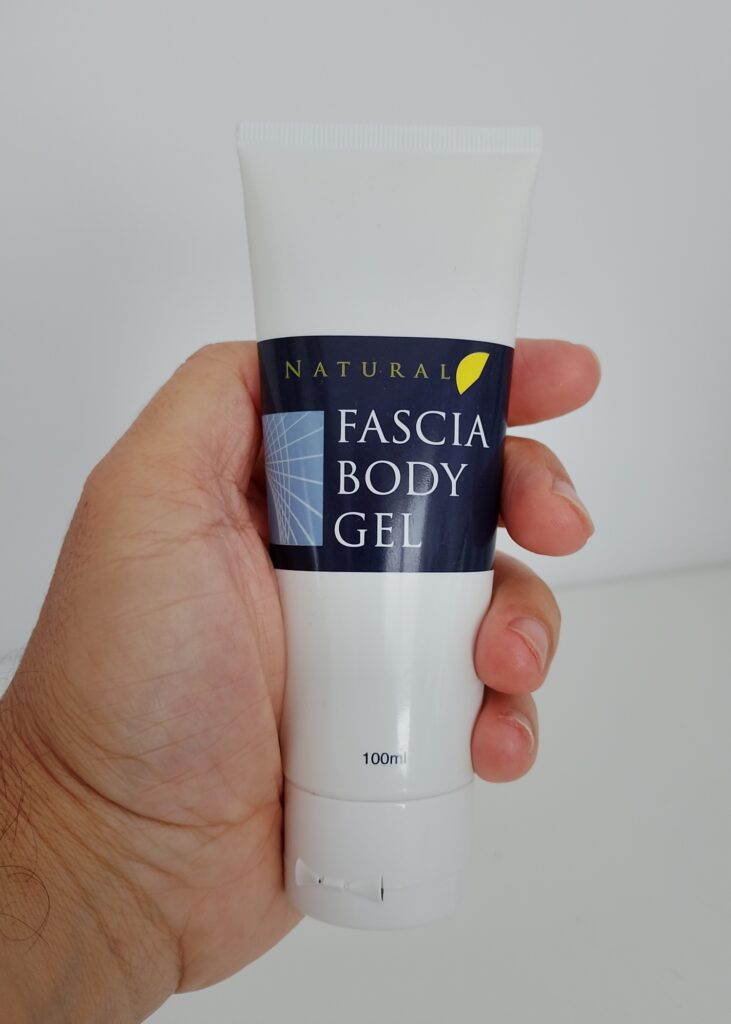
ABR Fascia Gel is used by ABR families to support the quality of fascia, connective tissue, skin-to-muscle glide, scars, hands, feet, breathing areas, facial control, and the body’s response to gentle ABR work.
It is easy to apply.
It takes only a few minutes.
And that is exactly why some parents underestimate it.
But fascia is not just “soft tissue.”
Fascia is the living mechanical network that surrounds, connects and guides muscles, tendons, ligaments, skin and deeper structures.
When this network becomes glued, stiff, dry, too loose or poorly organized, movement becomes harder. Muscle tone becomes harder to regulate. The body has less freedom to adapt.
ABR Fascia Gel was created to help improve this tissue environment.
Not by forcing movement.
Not by stretching harder.
But by helping the fascia become more responsive, more mobile, and more ready for the gentle structural work that ABR families do at home.
Can something this simple really make a difference?
Most ABR families are used to effort.
Exercises. Positioning. Tools. Appointments. Hours of work.
So when we say that applying a transparent Gel for a few minutes a day can make a meaningful difference, it can sound almost too simple.
But the Gel is not meant to replace ABR work.
It helps prepare the tissue environment so the body can respond better to the gentle structural work you are already doing.
- A little more tissue glide.
- A little less “gluing.”
- A little better response to gentle input.
Repeated daily, these small changes matter.
So we begin with the clearest, most visible example of glued fascia:
scars.
Leonid Blyum’s view
“The Gel is not meant to replace ABR work. But if it can help the tissue respond even 10–20% better, for only 2–3 minutes a day, then it becomes a very practical tool for families.”
— Leonid Blyum
Does it work? Start with scars
Scars are one of the clearest ways to understand what Leonid means by “glued fascia.”
They make the hidden tissue problem visible.
Visible scar transformation
Before | After
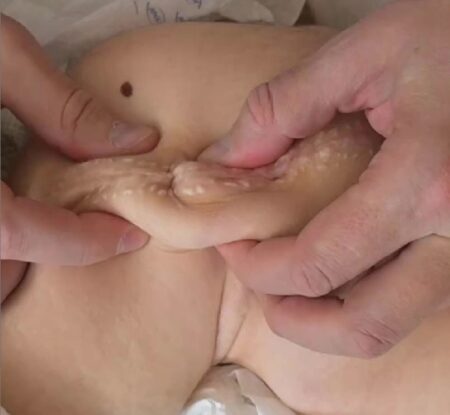
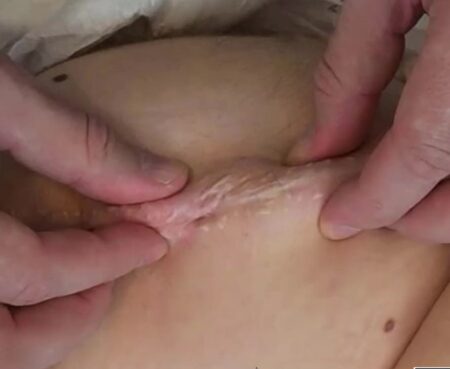
What this image shows
The important change is not only how the scar looks, but how the tissue behaves: softer, freer, and more mobile
“This is why scars matter: they show tissue change in a way families can see, touch, and follow over time.“
— Leonid Blyum
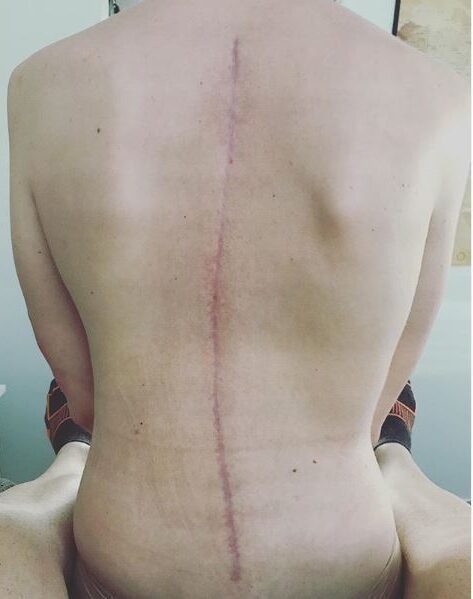
Long-standing scar tissue
Scars help us see fascia restriction clearly: tissue that has lost glide, softness, and elasticity.
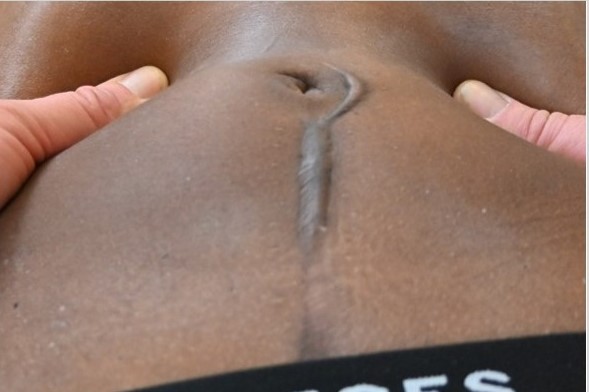
Visible scar transformation
The tissue is not only looking different. It is behaving differently — softer, freer, and more mobile
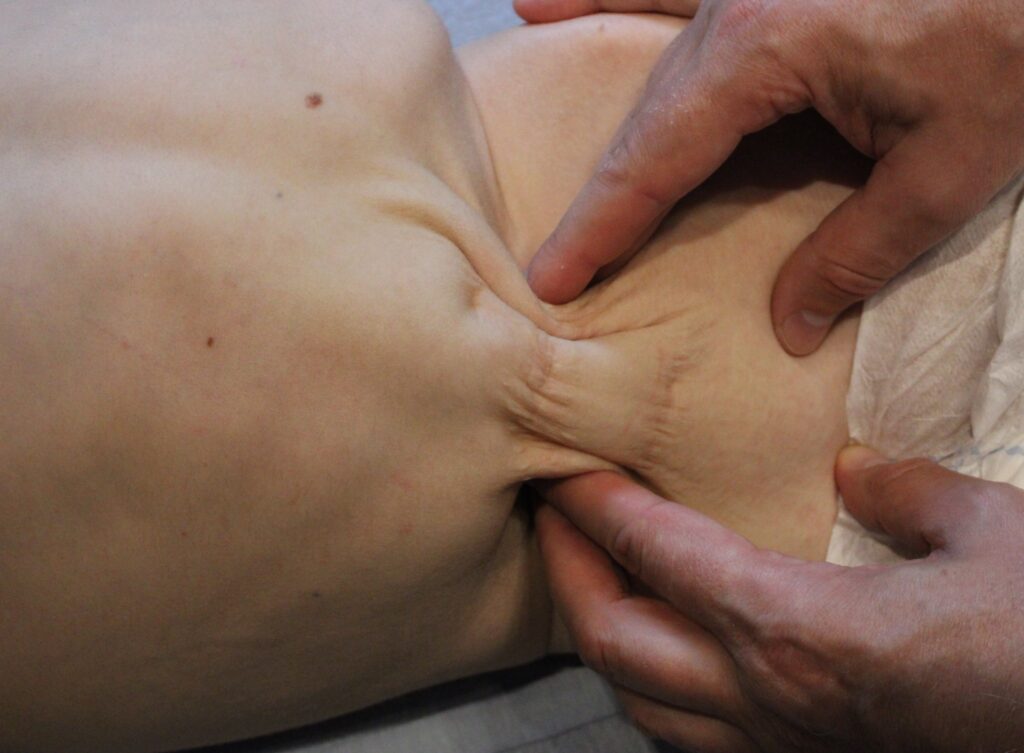
Skin-fascia glide
When tissue layers become less glued, they can begin to move more freely over each other.
Does it work in cerebral palsy?
In cerebral palsy, the visible problem often looks muscular:
stiffness, tightness, poor posture, weak control, limited movement or abnormal tone.
But from the ABR perspective, the muscle is never working alone.
It is wrapped, guided and restricted by fascia, skin, mechanical fat, tendons, ligaments and deeper connective tissue layers.
When these layers become glued, dry, stiff or poorly responsive, the child has less freedom to organize movement.
That is why ABR Fascia Gel is not used as “skin care.”
It is used to support the tissue environment around the muscles.
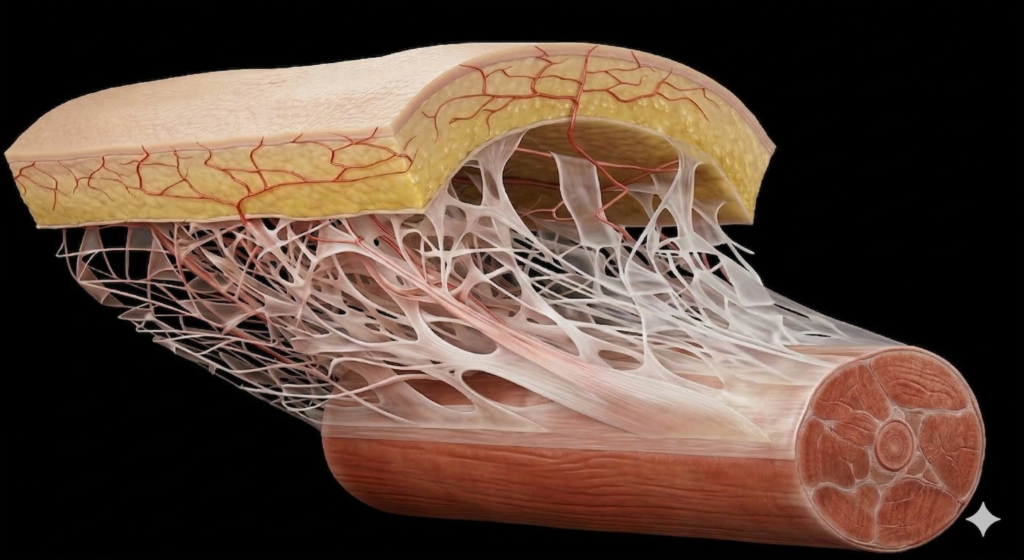
They are wrapped, connected and guided by fascia, skin and deeper connective tissue layers.
Where families often notice changes
After one year of ABR work with the Fascia Gel as part of the program, families may notice changes in different areas of the body, including face, mouth, feeding, posture, breathing, and hand opening.
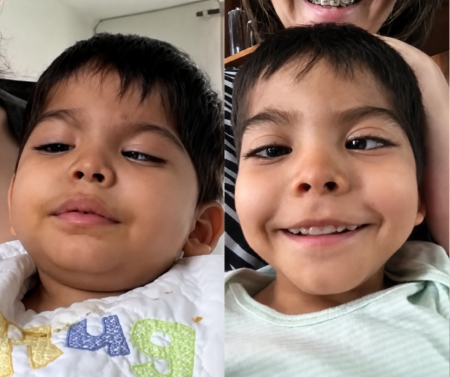
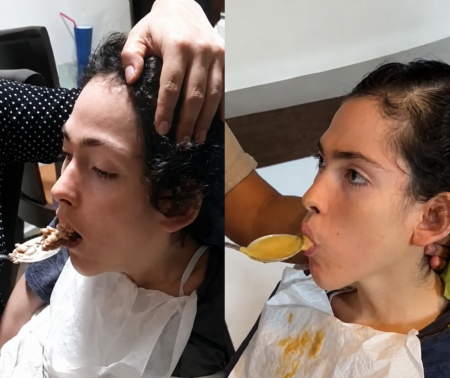
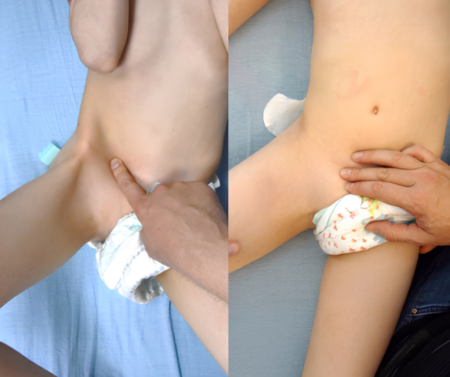
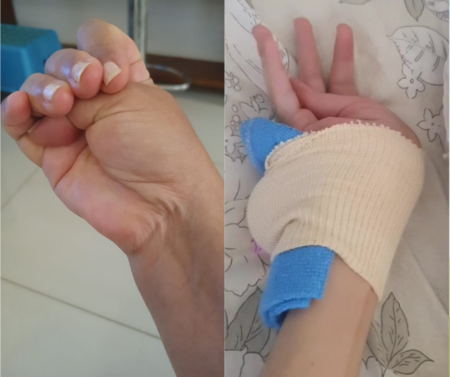
The Gel does not force movement.
It helps the tissue become more responsive, creating a better foundation for movement, comfort, posture and daily care.
The fascia science, simply explained
Fascia is not just passive wrapping.
It is living connective tissue that adapts to pressure, movement, load, hydration and stimulation.
One of the key cells involved in this remodeling process is the fibroblast.
Fibroblasts help maintain, repair and remodel the fascia environment. But when tissue becomes stiff, glued, stagnant or poorly responsive, these cells may become less active.
That is why Leonid often describes the process as “waking up” the fibroblasts.
There are two main ways to support this process.
1. Mechanical stimulation
This is the classical ABR approach: gentle, repeated mechanical input that helps the tissue respond and reorganize over time.
2. ABR Fascia Gel
The Gel adds a second, very practical daily support. It is applied through the skin, where it helps support the skin-fascia environment and the tissue conditions that allow the fascia to become more responsive.
Not forcing the body.
Not stretching harder.
But helping create a tissue environment where fascia can become more dynamic, more responsive and more capable of change.
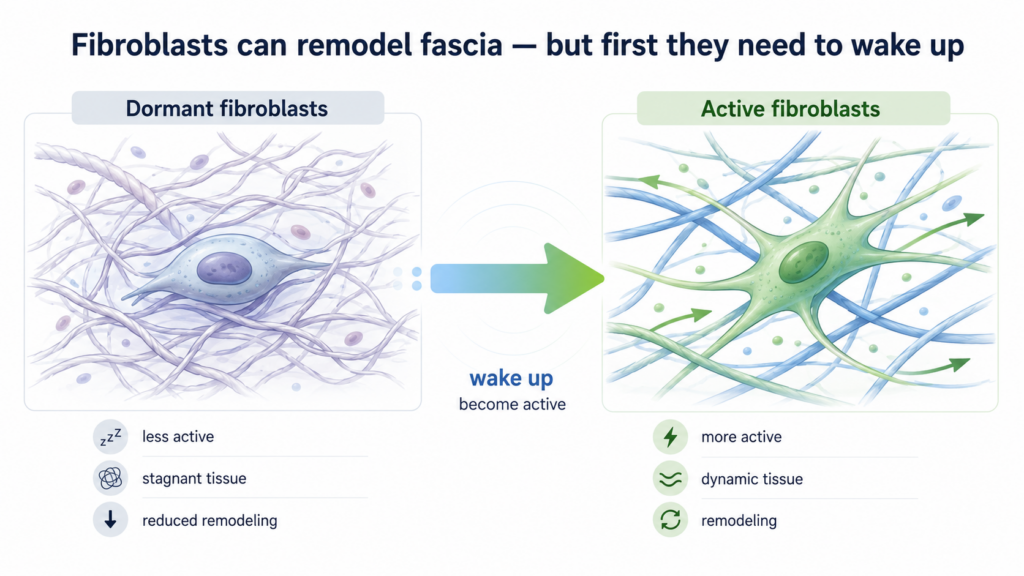
Fibroblasts are part of the body’s fascia remodeling system. When the tissue environment improves, fascia can become more dynamic, responsive and capable of change.
Want to go deeper?
Leonid Blyum has prepared two detailed explanations for families who want to understand the science behind ABR Fascia Gel and its practical use in structural rehabilitation.
Different problems. Same tissue logic
The ABR Fascia Gel was created to support fascia and connective tissue.
But over time, families and adults have used it in many different ways: scars, grafted tissue, hands, irritated skin, caregiver shoulders, daily routines and unexpected areas of tension or discomfort.
The stories are different, but the common thread is the same:
when tissue quality changes, daily life can feel different.
Jacob — scar and grafted tissue
Jacob’s skin had healed after severe burns and grafting, but the tissue underneath still felt tight and restricted. The Gel was used around the grafted area to support better tissue quality, mobility and comfort. A month later, his team contacted us again:
“Jacob would actually like to order 6 more tubes. He is already seeing results.”
Cherry, 82 — long-standing restrictions
Cherry began using the Gel around the eye, sinus and jaw areas. Her experience was unexpected, but it showed something important: even long-standing tissue restrictions may still have potential to respond. She summed it up very simply:
“I am absolutely certain it was the Gel.”
Ann — hands that work every day
Ann has worked professionally with her hands for decades. She began using the Gel on early Dupuytren-type tissue changes and noticed more softness and mobility in tissues she depends on every day.
“So far it is really helping a lot… when I use a tiny drop several times a day, it really softens the tissue.”
Easton — itching after intensive ABR work
After several days of intensive ABR work, Easton developed strong itching on his back, shoulders and hips, especially before sleep. His family began applying the Gel more frequently, before each session.
“No more itchy since.”
Where and how to use the Gel
ABR Fascia Gel can be used in many different areas because fascia is present throughout the body.
Most families do not use it everywhere at once.
They begin with the areas that matter most for their child, their routine, or their own body.
Where families often apply it

For facial softness, mimic activity, lips, cheeks, jaw tension and mouth control.

For areas connected to head control, shoulder tension, breathing support and upper body organization.

Around the ribs, diaphragm zone and upper abdomen, where many children with CP show stiffness, collapse or poor tissue mobility.

For lower trunk support, pelvic areas, hip pits and tissue zones that may feel empty, tight or restricted.

For areas where tissue may become stiff, clenched, tight, cold, poorly mobile or difficult to open.

For areas where the skin and deeper tissue layers feel glued, rigid, thick, tight or less mobile.

For areas that feel itchy, irritated, overloaded or unusually reactive, especially during periods of intensive tissue work or change.

Many parents and professionals also use the Gel on themselves, especially in areas overloaded by transfers, carrying, daily care or professional hand use.
How to use it
Apply a thin layer.
Use it consistently.
Start with the areas that matter most.
Once or twice a day is a good starting point. Some families use it more often in key areas, especially when tissue feels very reactive, sensitive or uncomfortable.
The Gel can be used before or after ABR exercises, during a simple massage routine, after bathing, before sleep, or as part of a calming daily ritual.
ABR Fascia Gel Video Library
Want to see Leonid explain the Gel in more detail?
These videos go deeper into the ABR view of fascia, skin, face, breathing, swallowing and tissue change.
Choose the topic that is most relevant for your child or your situation.
A real 12-month scar case showing how fascia gluing can change from rigid and immobile to more dynamic and responsive.
A general introduction to why ABR Fascia Gel became such an important support tool for ABR families.
Leonid explains why something as simple as a Gel can produce meaningful structural changes when the fascia environment becomes more responsive.
How changes in facial fascia can influence expression, eye activity, mouth control and global tone regulation.
Why Leonid pays so much attention to the face, eyes, lips, cheeks and mimic muscles.
Why the skin is not just a surface layer, and how the skin-fascia-muscle connection affects movement and tone.
How families can use the Gel around breathing-related areas such as the rib cage, upper chest, diaphragm zone and neck.
Examples of changes in lip activity, cheek involvement, suction, drinking and swallowing support.
How better tissue organization around the head, neck and mouth can support feeding, expression and postural control.
Why eye control matters so much in ABR, and how facial tissue changes can affect the child’s ability to organize attention and movement.
Frequently Asked Questions
Some families naturally want to know what they are applying to the skin.
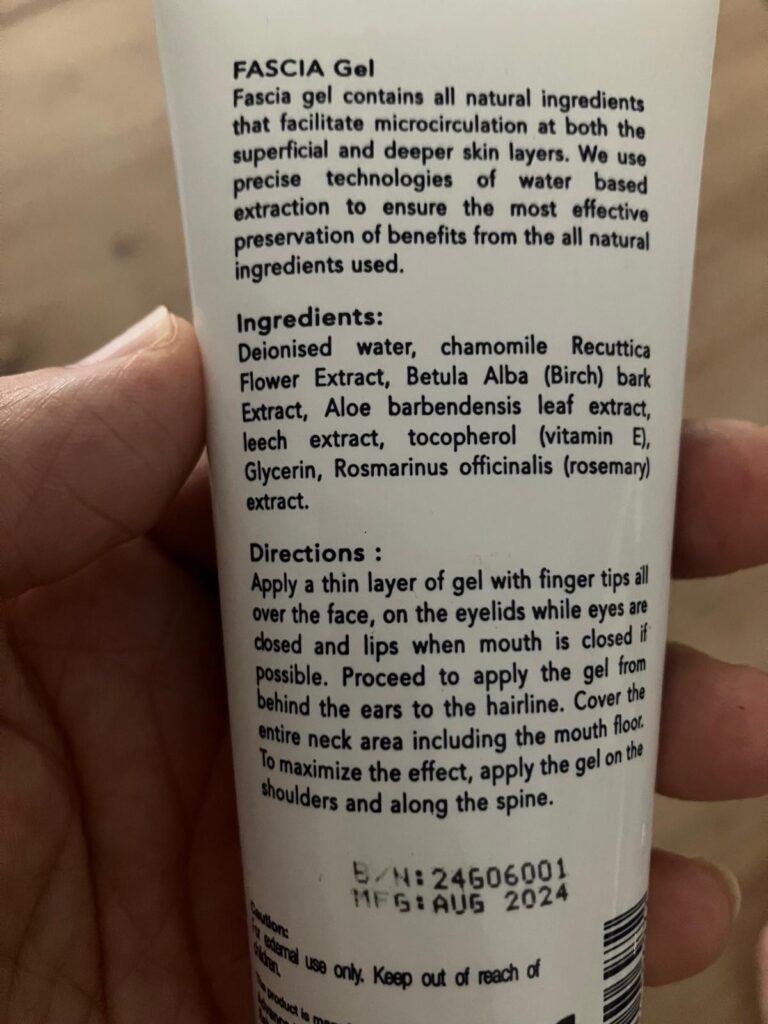
The ingredient list on the tube includes: deionised water, chamomile recutita flower extract, Betula Alba (birch) bark extract, Aloe barbadensis leaf extract, leech extract, tocopherol (vitamin E), glycerin, and Rosmarinus officinalis (rosemary) extract.
The key bioactive component is hirudin, extracted from leech saliva. This is part of the Gel’s fascia-support logic: not simply moisturizing the skin, but helping improve the tissue environment underneath.
No.
ABR Fascia Gel was developed through the ABR work with children with cerebral palsy and complex structural challenges, but fascia is present throughout every body.
Families have also used it for scars, grafted tissue, hands, caregiver shoulders, neck tension, irritated or reactive areas, and other everyday tissue concerns.
No.
The Gel does not replace ABR work, exercises, tools or structural rehabilitation.
It is used to support the tissue environment so the fascia, skin and connective tissue layers may become more responsive and mobile.
Some families use it as part of a full ABR program. Others use it independently in specific areas.
A good starting point is once or twice a day.
Some families apply it more often in key areas, especially when tissue feels reactive, itchy, tight, sensitive or uncomfortable.
The important point is consistency. A small amount used regularly is usually more useful than applying a lot once in a while.
Use a thin layer.
You do not need a large amount. Apply a small quantity with your fingertips and spread it gently over the area.
The goal is not to cover the skin heavily, but to make the Gel part of a simple, consistent tissue-support routine.
Start with the areas that matter most.
Common areas include the face, mouth, jaw, neck, upper chest, rib cage, abdomen, pelvis, hips, hands, feet, wrists, ankles, scars, grafted tissue, shoulders and spine.
You do not need to use it everywhere at once.
Yes, scars are one of the clearest examples of tissue layers becoming glued, rigid or poorly mobile.
Many families use the Gel on scarred or grafted areas to support tissue quality, mobility and comfort.
Avoid applying it on open wounds or irritated skin unless advised by a qualified professional.
Yes.
Adults, parents, caregivers and professionals have used ABR Fascia Gel on their own hands, shoulders, neck, back, scars or areas of tissue tension.
The Gel is not limited to children.
Yes.
Many caregivers develop overloaded shoulders, neck, back or hands from years of transfers, carrying, positioning and daily care.
Using the Gel on yourself can be a simple way to support the tissues you depend on every day.
Some children are sensitive to smell or texture.
One option is to introduce the Gel slowly and make it part of a pleasant routine, for example after bath time or before sleep.
Some families also place a small amount of Gel in a separate jar and combine it with familiar, appropriate essential oils to make the sensory experience more pleasant. Always choose oils carefully and use only what is safe and appropriate for your child.
Yes.
The Gel can be used alongside ABR exercises, massage, Z-Vibe, percussion tools or other gentle tissue work.
Some families apply it before or after the session. Others use it at separate moments during the day.
Itching can sometimes appear when tissue layers that have been stiff, glued or dormant begin to respond to work.
Some families have found that applying the Gel more frequently in those areas helps make the response more comfortable.
If the skin becomes red, irritated, inflamed or concerning, stop and seek professional advice.
If you have older tubes, open one and check that the Gel still looks, smells and feels normal.
Many families prefer to keep newer tubes for their child and use older tubes for adults or caregivers.
When in doubt, use fresh tubes for children or sensitive areas.
It depends on how many areas you apply it to and how often you use it.
A family using it daily in several areas will go through the Gel faster than a family using it only on one small area.
That is why most families choose either a 6-tube or 12-tube set rather than ordering a single tube.
The 6-tube set is a good starting point for families who want to use the Gel consistently in key areas.
The 12-tube set is better for families who plan to use it daily across several areas, or for families who want to keep enough Gel at home for longer-term use.